Choosing Woodworking Drawer Slides for cabinets is a small decision with large practical consequences. A drawer may carry cookware, tools, or dense hardware every day. Its slide must support that weight without binding, sagging, or creating excessive noise. The wrong choice often appears acceptable during installation. Problems emerge later.
Industry research supports this concern. Grand View Research identifies cabinet hardware as an important part of residential and commercial furniture performance. The Freedonia Group also links cabinet demand with renovation activity, storage expectations, and replacement hardware. NKBA trend reports repeatedly highlight organized storage as a valued kitchen feature. These reports do not choose a slide for you. They explain why durability, access, and smooth operation deserve attention.
Philipp Blum, managing partner of Blum, expresses the guiding principle clearly: “Quality is not a coincidence.” That idea applies directly to Woodworking Drawer Slides. Select the slide according to drawer dimensions, load rating, opening method, and cabinet construction. Full-extension runners expose the rear of a drawer. Soft-close systems improve daily comfort. Undermount designs create a cleaner appearance, but they demand more accurate installation.
Real workshop experience adds another warning. A heavier rating does not automatically mean better performance. Poor alignment can defeat expensive hardware. Moisture, uneven boxes, and loose screws also matter. This guide compares common slide types, measuring methods, load requirements, and installation details. Some recommendations may need adjustment for unusual cabinets. That is normal. Good hardware selection is precise, but never completely automatic.
How to Choose Woodworking Drawer Slides for Cabinets?
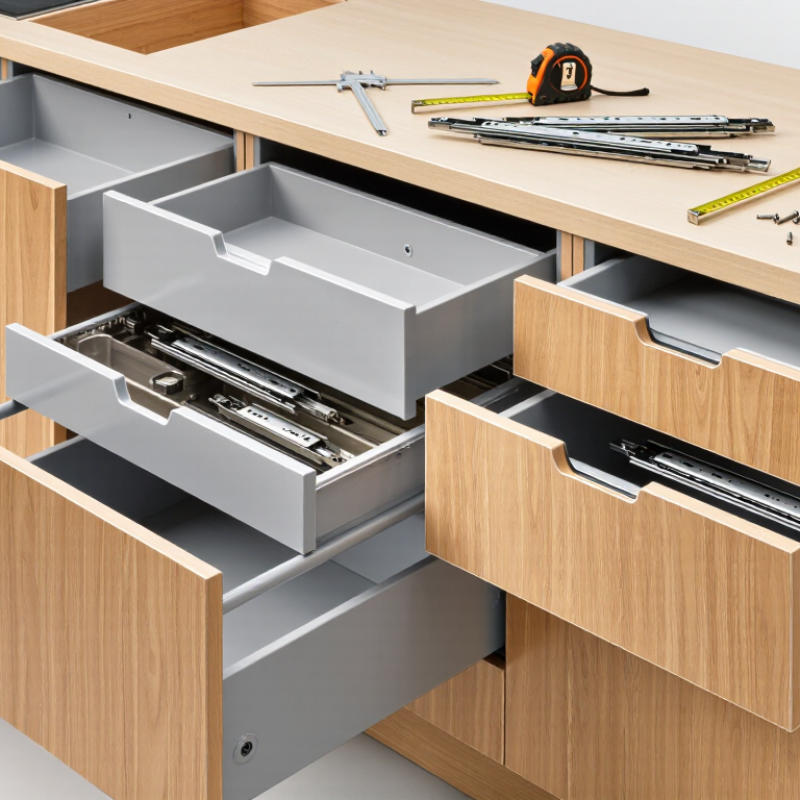
Understanding cabinet drawer slide types helps match hardware to real cabinet needs. Side-mount ball-bearing slides are common for kitchen drawers, workshop storage, and bedroom furniture. They offer smooth travel and strong support. Full-extension models let the drawer move completely forward. This makes items at the back easier to reach. However, side-mounted slides require clearance on both sides. Measure carefully. A small error can cause rubbing.
Undermount slides sit beneath the drawer and remain mostly hidden. They suit modern cabinets where clean lines matter. Many include soft-close mechanisms that reduce noise and protect the drawer front. Center-mount slides use one rail beneath the drawer. They work for lighter loads and traditional furniture, but they provide less stability than paired slides. Heavy-duty slides are better for wide drawers holding tools, cookware, or metal hardware. Do not choose them by appearance alone.
Experienced installers check drawer width, cabinet depth, mounting space, and weight together. A slide rated for 45 kilograms may perform poorly when the drawer is unevenly loaded. I usually test the empty drawer first, then add weight gradually. This catches alignment problems early. Still, I sometimes recheck the measurements after installation. Wood can shift slightly with humidity. Screws must enter solid material, not only thin panels. A level, firm mounting line matters more than fast installation. Soft-close slides also need accurate spacing; otherwise, the mechanism may feel stiff or fail to latch.
How to Choose Woodworking Drawer Slides for Cabinets?
Measuring Cabinets and Drawers for Proper Slide Selection
Accurate measurements prevent most drawer-slide problems. Remove the drawer and measure its box, not the decorative front. Measure the inside cabinet depth from the front edge to the back panel. Choose a slide slightly shorter than this depth. A slide that is too long may strike the cabinet back.
Measure the drawer-box width at several points. Wood can shift slightly with humidity. For side-mounted slides, check the required clearance on both sides. Many models need about 12.7 millimeters per side, but specifications can differ. Measure the cabinet opening too. A narrow opening can expose small errors quickly. It happens.
Check the drawer-box height and bottom clearance before choosing an undermount slide. The drawer must leave enough space for the hardware and its release mechanism. Also measure the cabinet face frame, if present. A frame may require a mounting bracket or a different slide arrangement. Do not assume every cabinet is square.
I usually record depth, width, height, and clearance on paper before shopping. Then I compare those figures with the slide’s load rating and extension type. Full-extension slides suit deep drawers because they reveal items at the back. For heavy cookware, select a stronger rating with a safety margin. I once trusted a single measurement and installed slides that rubbed after finishing. Rechecking both sides would have caught it. Leave room for real-world movement, not just perfect workshop conditions.
| Measurement or Selection Factor | How to Measure | Typical Example | Slide Selection Guidance | Important Check |
|---|---|---|---|---|
| Cabinet Opening Width | Measure the clear width between the inside faces of the cabinet sides. Take measurements at the front, center, and rear. | 24 in (610 mm) clear opening | Use the smallest recorded opening measurement when calculating drawer or slide clearance. | Cabinet walls may not be perfectly parallel, so do not rely on only one measurement. |
| Drawer Box Width for Side-Mount Slides | Subtract the required clearance for both sides from the cabinet opening width. | 24 in opening − 1 in total clearance = 23 in drawer-box width | Many side-mount slides require approximately 1/2 in (12.7 mm) clearance per side, but the slide specification must be confirmed before construction. | Excessive or insufficient clearance can cause binding, looseness, or poor load performance. |
| Drawer Box Width for Undermount Slides | Measure the cabinet opening, then subtract the manufacturer-specified side clearance for the selected undermount hardware. | 24 in opening with a slide system requiring 3/16 in per side: drawer width ≈ 23 5/8 in | Undermount clearance is not universal. Build the drawer to the exact slide specification rather than using the 1/2 in side-mount rule. | Check the required bottom recess, side notch, rear notch, and locking-device dimensions. |
| Usable Cabinet Depth | Measure from the inside face of the cabinet front to the obstruction at the back. Check for hinges, face-frame parts, plumbing, or electrical components. | 22 in (559 mm) usable depth | Choose a slide length that is equal to or shorter than the usable cabinet depth. Common nominal lengths include 12, 14, 16, 18, 20, 22, and 24 in. | Do not force a slide into a cabinet that is shallower than the slide length; leave room for rear brackets or adjustment hardware when required. |
| Drawer Box Depth | Measure the outside depth of the drawer box from the front edge to the back edge, excluding the decorative drawer front. | 20 in (508 mm) drawer box | A 20 in drawer commonly pairs with a 20 in slide when the cabinet provides sufficient usable depth and the slide system allows that configuration. | The drawer front can extend beyond the drawer box, but it should not be used when determining slide length. |
| Extension Type | Determine how far the drawer must open to provide access to its contents. | Full-extension slide: access to nearly the entire drawer box | Use 3/4-extension slides for light-duty or traditional applications, full-extension slides for general cabinet storage, and over-travel slides where the drawer must project beyond the cabinet opening. | Longer extension generally improves access but may require more accurate installation and sufficient clearance behind the cabinet. |
| Load Capacity | Estimate the combined weight of the drawer box, hardware, and stored contents. Include a safety margin for frequent use. | Drawer box 10 lb + contents 40 lb = 50 lb working load | Typical light-duty slides are often rated around 50 lb; medium-duty designs commonly support about 75–100 lb; heavy-duty designs may support 150 lb or more when correctly installed. | Load ratings vary by slide type, length, mounting method, cycle count, and installation quality. Use the rated capacity of the selected slide. |
| Mounting Position | Identify whether the slides will be mounted on the drawer sides, beneath the drawer, or at the center. | Side-mounted pair on a frameless cabinet | Side-mount slides are easier to retrofit and inspect. Undermount slides provide a concealed appearance. Center-mount slides are suited to compatible drawer designs and usually require precise alignment. | Face-frame cabinets may need rear sockets, front brackets, or spacers to create a level mounting surface. |
| Vertical Clearance | Measure the clear height of the cabinet opening and compare it with the slide and drawer-box requirements. | 4 in opening height with a 3 in drawer box | Leave enough space for the slide members, adjustment hardware, drawer movement, and neighboring drawers. | For multiple drawers, verify the vertical gap between drawer fronts so they do not contact each other during operation. |
| Drawer Squareness | Measure both diagonals of the drawer box. The two diagonal measurements should be equal or very close. | Diagonal A: 19 7/8 in; Diagonal B: 19 7/8 in | Install slides only after the drawer box is square, rigid, and free from twist. | A skewed drawer can cause uneven gaps, difficult movement, premature wear, and reduced load capacity. |
| Final Verification Before Installation | Recheck the smallest cabinet width, usable depth, drawer-box dimensions, slide clearances, mounting height, and load requirement. | Opening: 24 in wide; usable depth: 22 in; drawer box: 23 in wide × 20 in deep; estimated load: 50 lb | A suitable starting choice would be a correctly specified 20 in full-extension side-mount pair rated for at least the calculated working load. | Always follow the dimensional drawing and installation instructions supplied with the selected slide system. |
Choosing drawer slides starts with the drawer’s real workload, not its appearance. A utensil drawer may hold 10–15 pounds, while a deep pantry drawer can exceed 50 pounds when filled with jars. Add a safety margin of at least 25 percent. The 2023 U.S. Houzz Kitchen Trends Study reported that 76 percent of renovating homeowners upgraded countertops, showing how heavily modern kitchens are used during remodeling. That daily use makes smooth travel and tested durability important.
Match the slide design to the function. Full-extension slides let users reach the back of deep drawers, while soft-close mechanisms reduce impact on cabinet joints. For wide drawers, choose synchronized or paired slides to limit racking. Under-mounted slides provide a cleaner look, but side-mounted slides often offer clearer load ratings and easier inspection. Always compare ratings at the intended drawer width and extension length. A 100-pound rating may apply only under laboratory conditions.
Professional testing matters. ANSI/KCMA A161.1 evaluates cabinet durability, including drawer operation and repeated use. However, household habits are less controlled. A drawer packed with cast-iron cookware behaves differently from an evenly loaded test drawer. I once underestimated side pressure in a wide drawer; the slide was strong, but the box twisted. That mistake changed my selection process. Measure the opening, estimate the contents, check clearance, and inspect the mounting material before choosing the hardware.
Installation method affects both appearance and repair work. Side-mount slides are practical for face-frame and frameless cabinets, but they need accurate side clearance. Undermount slides hide beneath the drawer and create a cleaner look. They also demand precise drawer construction and careful alignment. Center-mount slides suit lighter drawers, although they can feel less stable when the drawer carries tools or cookware. Measure the opening twice. Small errors become obvious during daily use.
Material matters in real workshops. Zinc-plated steel handles normal household use and offers good value. Stainless steel suits humid kitchens, laundry rooms, and coastal homes. Polymer components resist corrosion, but they may flex under heavy loads. Check the slide’s rated capacity, not only its appearance. Extension length also changes usability. Three-quarter extension leaves the rear section partly hidden. Full extension exposes the entire drawer, making stored items easier to reach. Over-extension can clear thick countertops or nearby doors, but it requires stronger hardware and more space.
Tips: Test one installed drawer before fitting the whole cabinet. Listen for scraping, uneven movement, or excessive side play. Keep the manufacturer’s clearance requirements nearby. I once treated a tiny measurement error as harmless, then had to rebuild a drawer box. That mistake still influences my process. Wood movement can also affect alignment, especially with solid timber drawers. A careful dry fit often reveals problems earlier than final installation.
Drawer slide fit is judged at the cabinet opening, not on the workbench. Measure the box width, opening width, and slide clearance separately. Many side-mounted slides require about 12.7 mm clearance per side, but confirm the installation specification. A 1 mm error can create rubbing, uneven gaps, or a drawer that refuses to close. Install the slides temporarily with two screws. Open and close the drawer slowly. Listen for scraping.
Alignment matters more than appearance. Use a level, spacer block, and a fixed reference line across both cabinet sides. Check the front gap, rear gap, and drawer reveal. Then test the drawer at one-quarter, one-half, and full extension. The Freedonia Group’s 2023 Cabinets study identifies durability and functional hardware as important replacement considerations. That supports a practical point: smooth movement must survive repeated use, not only look correct on installation day.
Tips: Load the drawer with its expected weight before final fastening. Cycle it at least 25 times, then inspect screw movement and rail deflection. For heavier drawers, test beyond normal storage weight briefly. The 2024 Grand View Research report estimated the global furniture hardware market at about USD 19.6 billion in 2023, reflecting strong hardware demand. Still, market growth does not guarantee a perfect fit. My own workshop mistake was trusting cabinet symmetry; finished boxes were slightly different. Measure every opening. Then retest after seasonal wood movement.